Let’s Get Phygital
A project investigating the creative process of crafting ar adornments
Abstract / Text
One of the technologies that can be seen as an important innovation in this era is Computer-Aided Design (CAD) (Brown, 2009), which has revolutionised the creative capabilities available to designers and engineers worldwide. In recent years, we have also experienced the rise of related technologies, such as Augmented Reality (AR). These developments have allowed us to view images of the real world and images of computer-generated worlds in the same field of view (Berry et al., 2006). Artificial Intelligence (AI) is another tool evidently on the rise with the development of Open AI systems. Despite the proliferation of numerous software and hardware developments in recent years, one notices a distinct lack of questioning in regard to what influence these digital tools have on the creative process of the designers. The focus of this paper is the study of such digital tool integration specifically in the field of jewellery design. When studying a field so heavily associated with traditional handcraft values, implementing new tools is always faced with challenges. This paper will present the trajectory of a collaborative project named Let’s Get Phygital, which focuses on an experimental approach investigating contemporary jewellery in a digital/non-physical form. In its three consecutive editions (2021-2023) this exhibition-orientated project invited students from three institutions (London College of Fashion, Estonian Academy of Arts, PXL-MAD School of Arts) to take part in a series of lectures and seminars, learning and discussing the use of CAD, AR and AI in digital wearable design. This study is significant for both educational and industry purposes, as it primarily focuses on advancing knowledge about the jewellery design creative practice and the outcomes of this practice while integrating CAD, AR and AI. In this respect, qualitative approaches were employed towards a comprehensive analysis of how such digital tools have influenced the creative process of these young jewellery designers. The results indicate that the students taking part in all project editions experienced difficulties using the new digital tools yet found the results very rewarding. It was evident that the lack of CAD knowledge was an obstacle, which students attempted to overcome during the project. Students commented on how designing for a digital environment gave them the opportunity to rethink how they design and how their work interacts with the digital and physical body thus enriching their creative capabilities. The findings of this study also indicate that when used as a design tool, AR allows the user to explore new potentials in design. Each year software updates allowed the introduction of different performing elements such as animations, music/sound or full-body interactions. This resulted in transforming students’ creative outputs in ways conventional physical designs had not allowed them to. The findings of this study are particularly significant as projects like the present one have an impact on the skills of future generations of designers.
This presentation was awarded the IFFTI Chair Presentation award for an outstanding oral presentation, judged by peers at the conference.
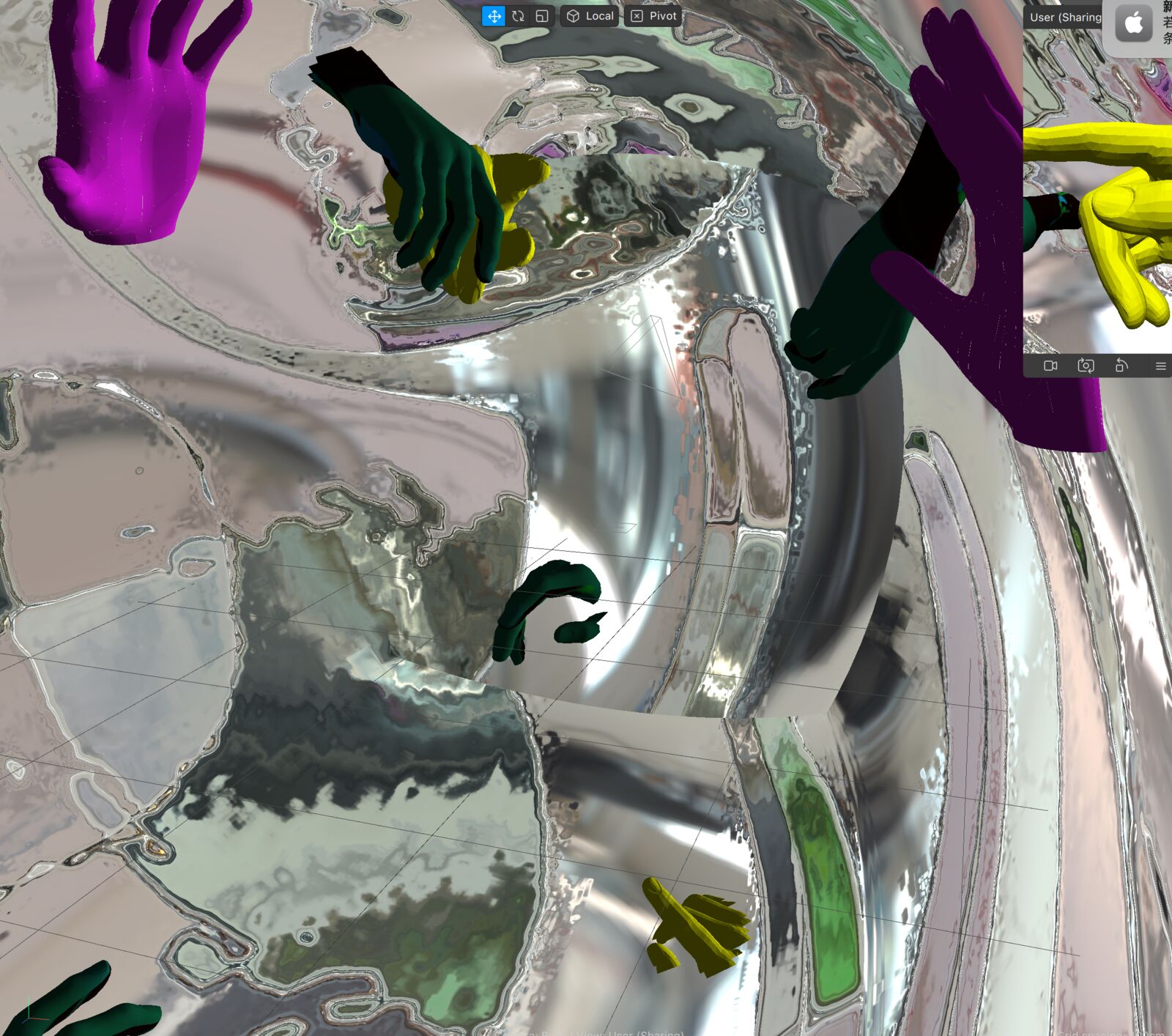
Digital filter developed by Yawen Luo, 2023
Munich Jewellery Week Social Club 2026
Panel Discussion
Abstract / Text
Let’s Get Phygital is a creative and educational project focused on digital filters, 3D modelling, and phygital design practices. It is a collaborative online international learning project between London College of Fashion, PXL-MAD School of Arts Hasselt and Rhode Island School of Design that investigates contemporary jewellery through experimental, non-physical, and digital approaches. It explores how AR and AI can expand design thinking and creative methodologies within jewellery practice. On 6 March 2026, the project’s organisers presented an overview of the initiative, showcased works by participants from the past five years, and hosted a talk with guest speakers Sofie Boons, Patricia Domingues, and Jonathan Mathew Boyd, exploring phygital adornment, its creation, meaning, and future possibilities.
All images are courtesy of Munich Jewellery Week 2026 public programme events, Photographer: Laura Schwabbauer.
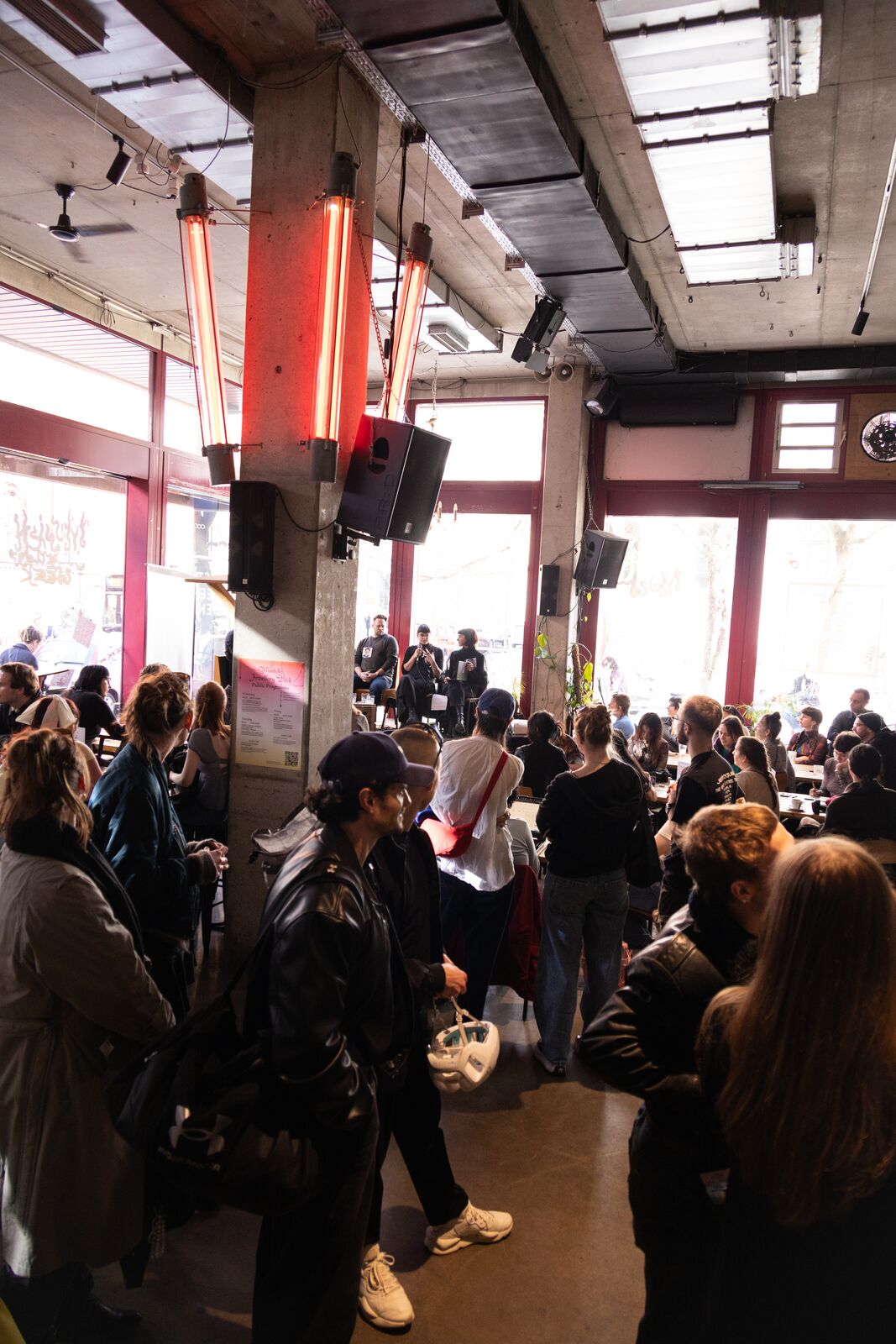
Overview of guests and social club event.